
A soaked area rug is on the clock — within 24 to 48 hours, standing water can trigger mold growth, dye bleed, and permanent odor that no amount of cleaning fully reverses.
Whether it’s a burst supply line, a water heater failure, or a storm that got past the door, what you do in the first day matters as much as the cleaning that comes after. Here’s exactly what to do, in order, and what to leave to a facility.
Quick answer: Get the rug off the wet floor immediately, remove excess water, and get airflow moving. Do not use high heat to dry it. If it’s been wet more than a few hours or you can’t fully dry it within 24–48 hours, plan on professional restoration — mold and dye bleed set in fast, and a rug that “smells fine” after drying can still be developing mold in the foundation.
Step 1: Get the rug off the wet surface
Standing water wicks upward continuously as long as the rug stays in contact with a wet floor or pad. Move the rug to a dry area as soon as it’s safe to do so — even a few extra hours of contact with a soaked floor meaningfully increases how much of the rug needs to be treated.
Step 2: Remove as much water as possible
- Blot — don’t rub — with clean, absorbent towels
- A wet/dry vacuum on a hard surface can pull out a significant amount of water if you have one
- Never use a household iron, hair dryer, or space heater directly on a wet rug — heat sets stains and can shrink or warp natural fibers
Step 3: Get airflow moving, not just heat
Fans and dehumidification move air through the rug and the space around it, which is what actually speeds drying. Direct heat without airflow does the opposite of what you want — it can dry the surface while moisture stays trapped underneath, which is exactly the environment mold needs.
Understanding water categories — why the source matters
Restoration professionals classify water damage into three categories, and it changes how a rug should be handled:
- Category 1 (clean water): A burst supply line or overflowing sink with no contaminants. Lowest risk, but still needs fast drying to avoid secondary mold growth.
- Category 2 (gray water): Water from a washing machine, dishwasher, or a source with some contamination. May contain some level of bacteria or chemical residue.
- Category 3 (black water): Sewage backup, flooding from outside, or water that’s been standing long enough to become contaminated. Requires professional handling regardless of how the rug looks — treating it yourself risks health exposure, not just rug damage.
Why the 24–48 hour window matters so much
Mold spores are present essentially everywhere and only need moisture, warmth, and time to establish. In a wet rug’s foundation — the dense, moisture-holding layer under the pile — that window is often closer to 24 hours than 48, especially in a warm North Texas home. Once mold sets into the foundation, the fix usually stops being a cleaning problem and becomes a restoration problem: the affected backing may need full remediation or, in severe cases, the rug may not be salvageable.
What happens if the window is missed
Past the first 48 hours, a handful of changes typically compound on each other. Mold and mildew odor becomes embedded rather than surface-level, meaning it can survive a standard cleaning and require dedicated antimicrobial treatment. Natural dyes that were stable when dry can begin to bleed once they’ve sat wet for an extended period, especially where colors meet. Wool and other natural fibers left damp for days can develop a change in texture as the protein structure starts to break down — a process that only accelerates the longer it continues. None of these are guaranteed outcomes, but the likelihood climbs quickly with every additional day of moisture.
What NOT to do
- Don’t fully roll up a wet rug and leave it — that traps moisture and accelerates mold
- Don’t apply carpet powder or heavy fragrance to mask odor — it can bond with wet fibers and complicate cleaning later
- Don’t assume a rug that “looks fine” once dry is actually clear of contamination, especially after flood or gray/black water exposure
- Don’t attempt a full wash-and-dry at home for anything beyond a minor, clean-water spill on a synthetic rug
Tip: If the water source was a flood, sewer backup, or anything other than a clean supply line, treat the rug as contaminated and don’t put it back in the home until it’s been professionally cleaned and dried, regardless of how it looks.
Working with insurance
Most homeowners policies cover water damage from a sudden, covered event like a burst pipe or failed appliance — though coverage for flooding from outside the home typically requires separate flood insurance. Document the damage with photos before moving or treating the rug if you plan to file a claim, and keep any receipts related to emergency mitigation. We work directly with insurance adjusters and can provide documentation of the rug’s condition and the restoration work performed, which is often what a claim needs to move forward smoothly.
Common sources of rug water damage in DFW homes
A few causes come up more often than others in North Texas specifically. Winter freeze events are a recurring one — pipes that aren’t adequately insulated for the occasional hard freeze can burst as they thaw, often catching homeowners off guard since deep freezes here are infrequent enough that plumbing isn’t always built for them. AC condensate line clogs are another common, quieter source: a blocked line can back up and slowly drip or overflow for days before anyone notices, which means the rug underneath may have absorbed water gradually rather than all at once — worth checking for if a rug seems damp with no obvious single event. Water heater failures, supply line breaks under sinks, and roof leaks during North Texas’ spring storm season round out the most frequent causes we see come through the facility.
What restoration actually looks like once the rug arrives
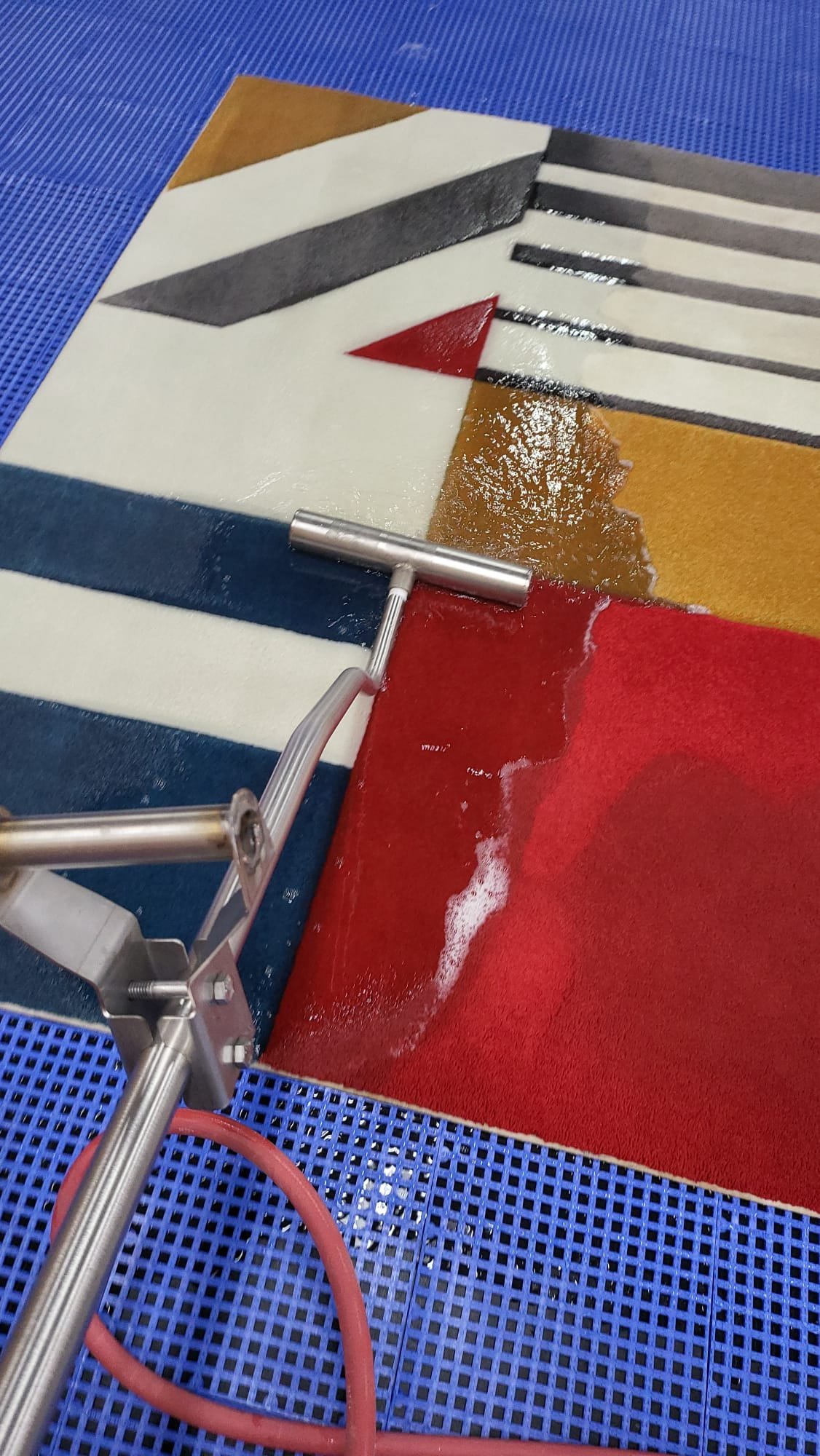
Once a water-damaged rug reaches the facility, the process starts with an assessment of contamination level and how far moisture and any resulting odor have spread. From there it goes through a full-immersion wash appropriate to the fiber, which does double duty — cleaning the rug and flushing out any contamination or early mold growth in the same process. Antimicrobial treatment is applied where indicated, and the rug is dried in a controlled environment specifically to prevent the regrowth that home drying conditions often can’t avoid. The goal throughout is to fully reverse the water event, not just dry the rug out and hope nothing developed in the meantime.
Frequently asked questions
How do I know if my rug is already growing mold?
A musty smell, discoloration, or a fuzzy texture on the back of the rug are common signs. Mold can also be present without a visible smell yet, which is why time matters more than symptoms.
Can a water-damaged rug always be saved?
Often, yes — especially wool and synthetic rugs treated quickly. Silk and antique rugs are more fragile, and the outcome depends heavily on how fast the rug was dried and how contaminated the water was.
Does homeowners insurance typically cover this?
Frequently, if the water damage is from a covered event like a burst pipe. We work directly with insurance and can document the damage as part of a claim.
Is it safe to just air-dry the rug outside?
It can help short-term, but direct sun can fade colors and outdoor humidity in DFW often isn’t low enough to fully dry a dense rug’s foundation — professional drying equipment is built specifically for that.
What’s the difference between water damage restoration and regular rug cleaning?
Restoration addresses contamination, mold risk, and structural drying of the foundation — a more urgent and involved process than a routine wash, though it’s often followed by a full cleaning once the rug is stabilized.
Should I call a rug specialist or a general water damage company first?
For the rug itself, a specialist matters — general restoration companies are equipped for structural drying but not always for fiber-safe rug handling, especially on wool, silk, or antique pieces.
Can a slow AC condensate leak damage a rug even without a flood event?
Yes — a clogged condensate line can drip slowly for days before it’s noticed, leaving a rug damp long enough to develop mold or odor even without a dramatic, sudden water event.
Get a Free Quote → (469) 429-RUGS(7847)
Related: water-damaged rug restoration · fire & water rug restoration · mold removal & remediation