
A rug boxed up in a Texas garage or attic during a move isn’t just inconvenient to retrieve later — it’s actively at risk from heat, humidity swings, and moths the entire time it’s in there.
Whether you’re remodeling, moving, or just putting a seasonal rug away, where and how it’s stored matters as much as how it’s cleaned beforehand. Here’s what actually happens to a rug in typical DIY storage, and why climate control changes the outcome.
Quick answer: Garages, attics, and standard self-storage units in North Texas swing widely in temperature and humidity, which promotes mildew, dye instability, and insect activity in stored rugs. Proper storage means the rug is cleaned first (soil and residue attract pests and can set stains during storage), then wrapped in breathable, acid-free materials, and kept in a stable, climate-controlled, moth-protected environment.
Why DFW’s climate is especially hard on stored rugs

North Texas summers regularly push garage and attic temperatures well past 100°F, and humidity swings between a hot, muggy summer and a dry winter are significant. That kind of instability is exactly what natural fibers handle poorly over time — repeated expansion and contraction can stress fibers and foundations, while trapped humidity in an enclosed box or container creates ideal conditions for mildew.
What actually goes wrong in DIY storage
- Mildew and musty odor from humidity trapped in a sealed container or plastic wrap
- Moth infestation — dark, undisturbed storage is exactly the environment clothes moth larvae prefer
- Dye instability from heat exposure, especially in un-conditioned attics
- Set-in stains from soil that wasn’t cleaned before storage, which can bond permanently over months
- Creasing or fiber stress from improper folding or rolling
Why cleaning before storage isn’t optional
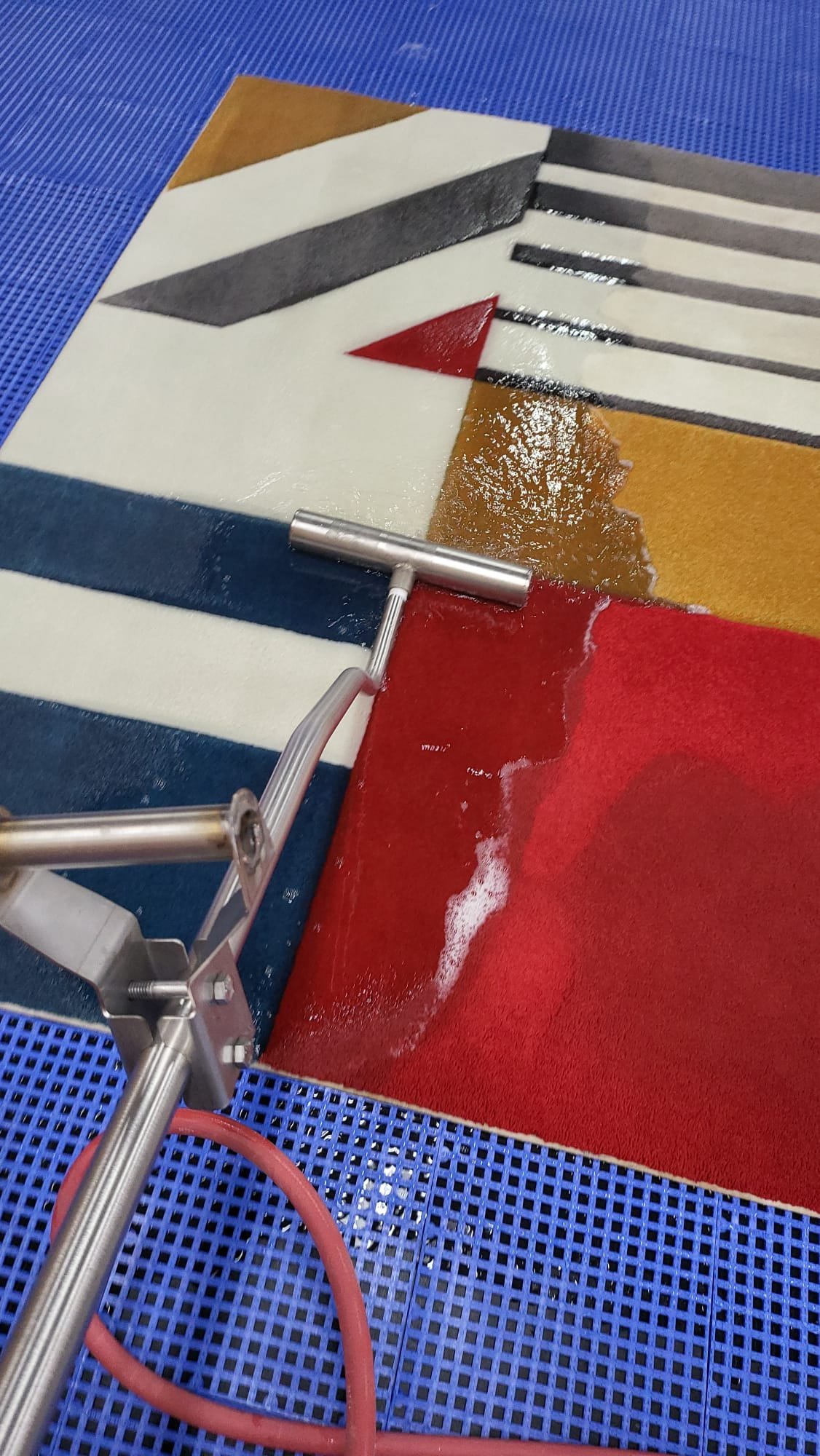
Soil, oils, and any pet residue left in a rug don’t just sit passively during storage — they can attract insects, provide food sources for larvae, and chemically set into fibers over months of undisturbed contact. A rug should always be professionally cleaned immediately before long-term storage, not after it comes out.
Seasonal storage vs. long-term storage
The right approach depends partly on how long the rug will actually be away. Seasonal storage — a summer rug swapped out for winter, for example — still needs cleaning first and stable conditions, but the shorter timeframe gives less opportunity for gradual problems like dye fading to develop. Long-term storage, common during a remodel, a move between homes, or downsizing, carries higher stakes: more time for humidity cycles to compound, more time for an undetected pest issue to establish, and often less frequent checking in on the rug’s condition. For anything beyond a few months, climate-controlled storage with periodic condition checks is worth the cost difference over a garage or standard storage unit, especially for wool, silk, or antique pieces.
What proper storage actually looks like
- Full cleaning first — removes soil and residue that attracts pests and can set during storage
- Rolled, not folded — folding creates permanent creases over time; rolling distributes stress evenly
- Wrapped in breathable, acid-free paper — not sealed plastic, which traps humidity
- Stored in a stable, climate-controlled, moth-protected space — consistent temperature and humidity, away from direct light
What it costs to get this wrong
The real cost of improper storage usually isn’t visible until the rug comes back out. A rug that develops moth damage, mildew odor, or dye fading during storage often needs the kind of restoration work — deep treatment, color correction, sometimes repair — that costs meaningfully more than the storage fee it would have taken to do it right in the first place. For a valuable wool or hand-knotted rug, that gap can run into hundreds of dollars in avoidable restoration versus a modest monthly or seasonal storage cost.
Tip: If a rug has been in garage or attic storage for more than a season, have it inspected before returning it to your home — early moth or mildew damage is far easier to treat than damage that’s had months to spread.
What to look for in a storage provider
Not all “climate-controlled” storage is equal. When evaluating a provider for a valuable rug, look specifically for consistent temperature and humidity control (not just air conditioning that cycles on and off), a stated moth-prevention protocol rather than a general pest-control mention, and storage that keeps rugs rolled rather than folded or stacked flat under weight. It’s also worth asking whether the facility cleans rugs before storing them or requires that as a separate step, since a facility that handles both in sequence eliminates a gap where an uncleaned rug might otherwise sit.
The pickup-to-storage workflow
The most efficient path for a rug headed into storage skips an unnecessary trip back home entirely. Rather than having a rug cleaned and delivered back to the house only to be boxed up again, we can clean a rug and transfer it directly into climate-controlled storage from the facility — saving a redundant delivery and, more importantly, removing any window where a freshly cleaned rug might sit around and pick up new soil, moisture, or pest exposure before storage actually begins.
What a proper climate-controlled facility actually includes
“Climate-controlled” gets used loosely enough in self-storage marketing that it’s worth knowing what the term should actually guarantee for a rug specifically. At minimum, that means consistent temperature and relative humidity held within a stable range year-round, not just air conditioning that cuts on and off with outside heat. It also means the space is actively monitored for pests, with moth-prevention measures built into the storage protocol rather than left to a generic building-wide pest service. Rugs should be stored rolled on padded supports, off the floor, rather than folded or stacked flat under weight from other items, since sustained pressure on folded fiber is its own slow source of damage even in otherwise ideal conditions.
Weighing storage cost against restoration risk
It’s worth putting a number on what’s actually being protected. Climate-controlled rug storage typically runs a modest monthly or seasonal fee — a small, predictable cost. Compare that against what it costs to reverse the kind of damage improper storage causes: a moth infestation that’s spread across a rug’s pile, mildew odor that’s worked into the foundation, or dye instability from months of attic heat can each require specialized restoration work running well into hundreds of dollars, and in severe cases the damage isn’t fully reversible at any price. For a rug worth protecting in the first place, proper storage is close to the cheapest insurance available against the most common, and most avoidable, causes of long-term rug damage.
Rugs that need extra caution in storage
While every rug benefits from proper storage, a few types carry higher stakes if conditions slip. Silk and viscose are especially sensitive to humidity swings and can develop permanent water spotting or dye migration if trapped moisture ever reaches them, even briefly. Hand-knotted wool rugs with natural dyes face a higher risk of dye instability from heat exposure. And any rug with prior repairs or fragile foundations is more vulnerable to stress from improper folding or rolling. For these categories in particular, climate-controlled storage isn’t just a nice-to-have — it’s the difference between a rug that comes back exactly as it went in and one that needs restoration work afterward.
Frequently asked questions
How long can a rug safely stay in climate-controlled storage?
Indefinitely, as long as conditions stay stable — unlike garage or attic storage, a properly climate-controlled, moth-protected environment doesn’t have a practical time limit.
Is plastic wrap ever okay for rug storage?
Generally no for long-term storage — sealed plastic traps humidity against the fiber, which is one of the more common causes of mildew in stored rugs.
Do I need to store a rug pad separately?
Yes — pads should be cleaned and stored separately from the rug, since foam and rubber pads can degrade differently than the rug fiber itself.
Can a rug be picked up, cleaned, and put straight into storage?
Yes — that’s the ideal sequence: pickup, full cleaning, then direct transfer into climate-controlled storage rather than a trip back home first.
Is a standard self-storage unit good enough?
Non-climate-controlled units face the same temperature and humidity swings as a garage, so they carry similar risks — look specifically for climate-controlled, ideally moth-protected storage for rugs.
Should I check on a stored rug periodically?
Yes — an occasional check, even in good storage conditions, catches minor issues early rather than letting them go unnoticed for the full storage period.
Can a rug go straight from the facility into storage without coming home first?
Yes — that’s actually the most protective sequence, since it avoids any gap where a freshly cleaned rug might sit and pick up new soil or moisture before storage begins.
Get a Free Quote → (469) 429-RUGS(7847)
Related: climate-controlled rug storage · moth treatment & prevention · custom rug pads