
Wool and silk rugs can sit two feet apart in the same living room — but the wrong cleaning method on either one can ruin it, sometimes permanently.
Both are natural fibers, both show up in hand-knotted rugs, and both get sold as “delicate — dry clean only.” That similarity is exactly where DIY cleaning and general carpet cleaners get it wrong. Here’s what actually separates the two, and why matching the method to the fiber matters more than almost anything else in rug care.
Quick answer: Wool is durable and can tolerate a full wet wash with moderate agitation. Silk is weak when wet, prone to browning from over-wetting, and needs a gentler, slower hand-wash with tightly controlled drying. Using a wool process on silk risks permanent fiber damage and color loss; using an overly gentle process on wool leaves embedded soil behind.
Why wool and silk can’t be cleaned the same way
The difference comes down to the fiber itself, not just the label. Wool fiber is covered in overlapping scales that make it naturally resilient, elastic, and able to hide soil well — which is part of why it can handle a full-immersion wash and moderate mechanical action. Silk is a smooth protein filament with almost no elasticity. It loses roughly 15–20% of its strength when wet and is far more prone to fiber breakage, splitting, and permanent creasing if it’s mishandled while damp.
- Wool: durable, resists soiling, tolerates a deeper wash, dries with body
- Silk: fragile when wet, prone to browning and water spotting, needs gentle hand-work and fast, controlled drying
What happens when silk is cleaned like wool
Over-wetting or agitating silk the way you would wool tends to cause a handful of specific, visible problems:
- Browning — a yellow-brown discoloration that appears as the rug dries, caused by cellulosic residues in the foundation wicking to the surface
- Fiber splitting and a “fuzzy” texture where the silk loses its natural sheen
- Dye bleed between colors, since silk dyes are often less wash-fast than wool dyes
- Water rings or spotting if drying isn’t fast and even
- Permanent creasing — silk that’s folded or crushed while wet can hold that crease even after it dries
What happens when wool is cleaned like silk
Go too gentle on wool and the opposite problem shows up: the wash never reaches the base of the pile. Wool traps soil deep in its scaled fiber structure, and a light surface clean — the kind appropriate for silk — leaves grit, dander, and oils embedded at the foundation. That residual soil is what grinds down fibers over time and dulls the rug’s color, even though the surface looks clean right after service. Under-washing wool also fails to fully clear allergens and odor sources that a full-immersion wash is specifically designed to remove.
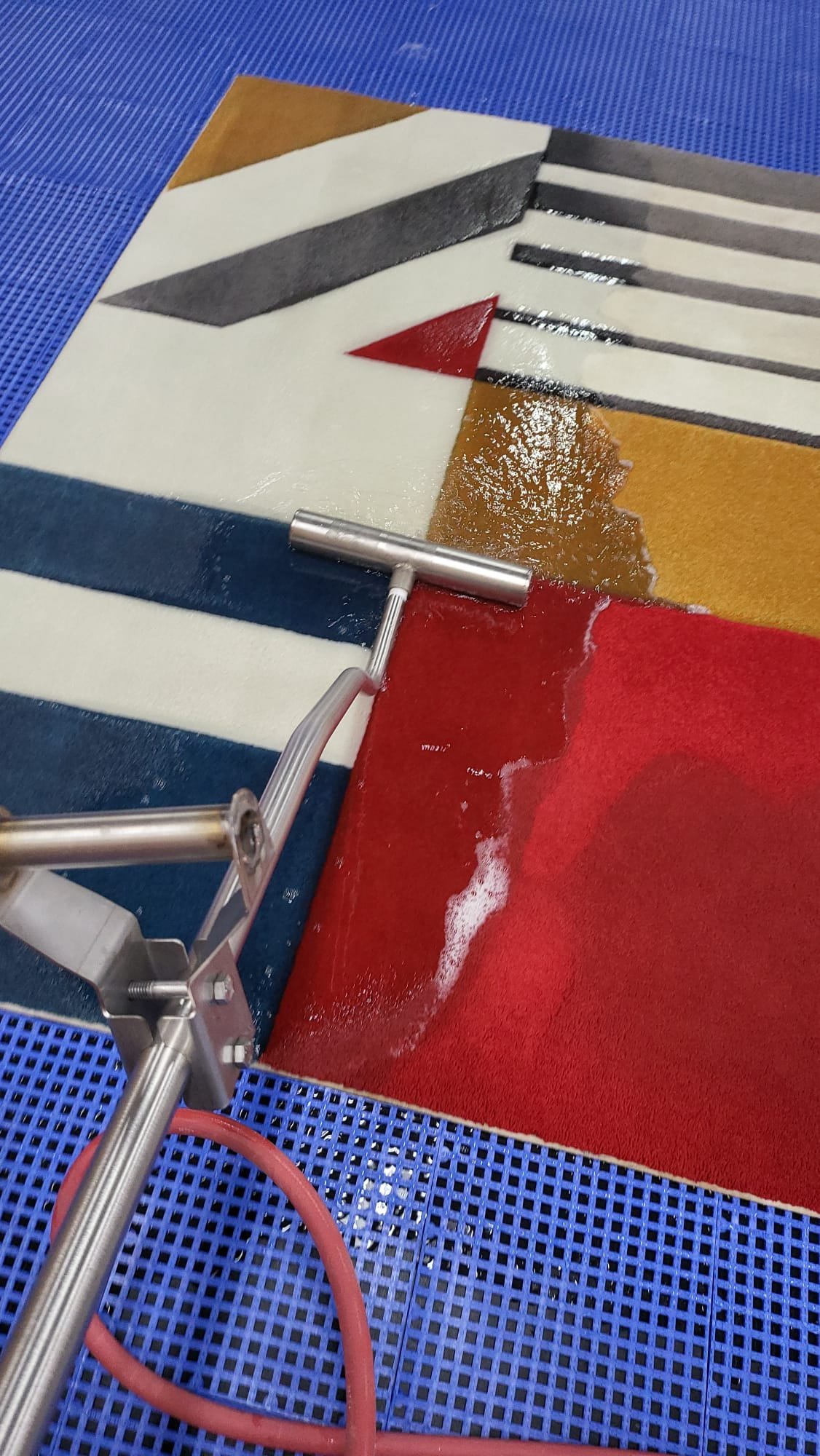
How to tell what your rug actually is
A burn test is the definitive answer (wool self-extinguishes and smells like burnt hair; silk curls and smells faintly like burnt paper), but that’s not practical on a finished rug. In practice, look at the sheen — silk has a natural light-reflecting luster wool doesn’t have — and check the weave density and any label or bill of sale. When in doubt, a professional fiber ID before cleaning is the safer route, which is why we test dyes and identify fiber before any water touches a rug we take in.
What about wool-silk blends and “art silk”
A lot of confusion — and a lot of damaged rugs — come from a third category: blends and imitations. Wool-and-silk highlight rugs use a small percentage of real silk to accent a pattern, and that silk portion needs to drive the cleaning method even though it’s a minority of the rug. Viscose, often marketed as “art silk” or “bamboo silk,” looks and feels similar to real silk but is actually a regenerated cellulose fiber — and it’s arguably even more water-sensitive than genuine silk, prone to permanent flattening and yellowing if it’s overwetted. Treating viscose like real silk is a safer default than treating it like wool.
The professional identification process
Before any rug goes into a wash at our facility, it goes through a fiber and dye identification step. That includes a visual and tactile assessment of the pile, a check of the foundation material, and a small, inconspicuous dye-stability test using the actual cleaning solution that would be used. Only after that does the rug get assigned to a wash method — full-immersion for durable fibers, or a slower, hand-controlled process for silk, viscose, and other delicate materials. Skipping this step is the single biggest reason DIY and general carpet-cleaning outcomes go wrong on natural-fiber rugs.
Why this matters more in DFW
North Texas’ hard water and clay-soil dust make the stakes higher on both ends. Hard water minerals can bond with silk during a poorly-rinsed wash and dull its shine permanently, while DFW’s gritty red-clay dust is exactly the kind of abrasive soil that needs a full-immersion wash to clear out of wool — surface cleaning alone just pushes it deeper. Our long, humid summers also extend drying time for anything cleaned in place at home, which raises the risk of browning on silk and mildew odor on wool alike.
Tip: If you’re not sure what your rug is made of, don’t rent a machine or spot-treat aggressively. The wrong guess on fiber type is the single most common cause of rug damage we see come through the facility.
Drying: the step that decides the outcome
Cleaning gets most of the attention, but for both fibers, drying is where things actually go wrong or go right. Wool can dry with moderate airflow over a somewhat longer window without much risk, since its scaled fiber structure and natural elasticity tolerate the process well. Silk needs the opposite treatment: fast, even drying with tightly controlled humidity, because every extra hour spent damp increases the risk of browning, water spotting, and the kind of permanent creasing that shows up if the rug is moved or folded before it’s fully dry. This is a major part of why facility drying rooms exist — they’re built to give each fiber the drying profile it actually needs, something that’s very difficult to replicate cleaning a rug in place at home.
Caring for wool and silk rugs between professional cleanings
The right day-to-day care also differs by fiber. Wool tolerates regular vacuuming reasonably well, though it should still be done gently and on both sides periodically. Silk is far more sensitive to vacuum beater bars, which can snag and pull at the smooth filament — a vacuum with adjustable or no beater-bar contact, used gently, is the safer choice. For both fibers, spills should be blotted immediately, never rubbed, and never treated with a home carpet-stain remover, since many of those products are formulated for synthetic carpet fiber and can discolor or damage natural fibers, especially silk.
Frequently asked questions
Can silk rugs be washed with water at all?
Yes — but it has to be a controlled, hand-wash process with fast, even drying. Silk isn’t “dry clean only” by necessity, it just requires far more careful handling than wool.
Is wool-and-silk-blend rug cleaning different again?
Yes. Blended rugs (common in modern “art silk” or viscose-accent pieces) need to be treated by their most delicate fiber, since the silk or viscose portion will be damaged first if the wash is too aggressive.
Why did my silk rug turn yellowish after cleaning somewhere else?
That’s browning — usually caused by over-wetting and slow drying. It can sometimes be corrected with a proper re-wash and controlled drying, but it’s much easier to prevent than reverse.
How do professionals identify a rug’s fiber before cleaning?
Visual inspection of sheen and weave, a burn test on a loose fiber when needed, and testing dye stability in an inconspicuous spot before any full wash begins.
Is viscose the same thing as silk?
No — viscose is a manufactured cellulose fiber often marketed as “art silk.” It looks similar but behaves differently in water, and is arguably even more prone to permanent damage from over-wetting than real silk.
Does a wool rug ever need the same gentle handling as silk?
Antique or hand-knotted wool rugs with fragile foundations or unstable natural dyes sometimes do — age and dye type can matter as much as the fiber itself, which is why testing happens on every rug, not just silk ones.
Is it safe to vacuum a silk rug at home?
Yes, with care — use a vacuum with adjustable or minimal beater-bar contact and go gently, since the smooth silk filament is more prone to snagging and pulling than wool.
Get a Free Quote → (469) 429-RUGS(7847)
Related: wool rug cleaning · silk rug cleaning · our cleaning methods